

A High Calling: LCU Alumni in the Skies
At Lubbock Christian University, students are equipped not just with degrees, but with a strong foundation of faith, community, and purpose that prepares them to answer their unique callings—wherever those may lead. For several alumni, that calling has taken them to the skies as pilots in commercial aviation, U.S. military service, agriculture, private flying, and beyond. Guided by the relationships and values nurtured during their time at LCU, these former LCU students share stories of how their journeys unfolded, the meaningful experiences that shaped them, and the ways their faith continues to influence their work in the cockpit.
There are certainly generational differences in this featured sampling of pilots who were once LCU students. Yet they each testify to the fact that faculty and staff who were here during their LCU experience truly walked with them during their very formative years, just as faculty and staff continue to walk with the students of today.
These pilots, spanning decades of LCU history, offer unique perspectives and experiences as they reflect on their time at the university and their journeys in aviation:
- Mark Davies ('74)
- Jade McMinn Foster ('18)
- Dudley McNeill ('73)
- Tim McNeill ('78)
- Tom Moudy ('67)
- Caleb Posey ('17)
Mark Davies ('76)
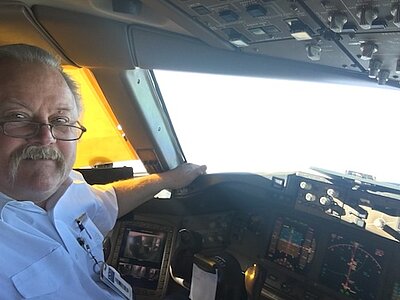
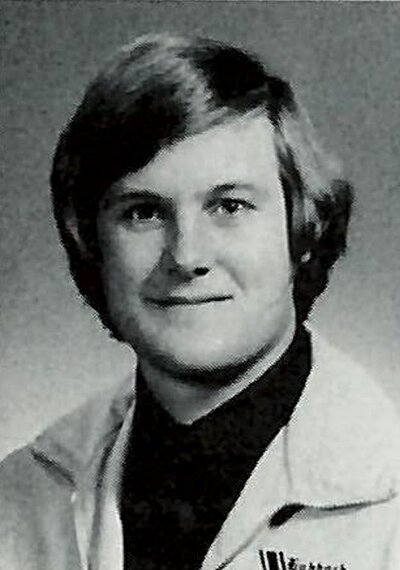
Mark came to LCU from Lubbock Christian High School as a music major. He married his wife, Sharon (Carey), while they were students at LCU in 1974, and the two recently celebrated their 51st wedding anniversary on December 28. Now living in Vero Beach, Florida, Mark and Sharon are the parents of five children and grandparents to nine.
All five of their children attended LCU at some point, with their youngest daughter, Heather (Davies ’14) Kalina, being an LCU alumna.
When did you know flying was more than just a hobby or interest — that it was your calling or career path?
I always wanted to be a pilot since I was about 5 years old. In high school, I went on a mission trip to Switzerland and was allowed during the flight to go up to the cockpit. This just gave me more drive to achieve that goal.
What path did you take after graduation to become a pilot?
I started training for my private pilot’s license in 1972 after graduating from Lubbock Christian High School and completed my Private Pilot license while attending Lubbock Christian College. After two years at LCC, I joined the U.S. Air Force and worked as an Air Traffic Controller. During that time, I finished my bachelor’s degree at Embry-Riddle Aeronautical University and completed my multi-engine and instrument ratings. After 10 years in the Air Force, I was hired by the FAA as an air traffic controller, where I earned my Airline Transport Rating and Flight Engineer rating. I later transferred within the FAA to Flight Inspection, flying Sabreliner jets out of Oklahoma City and certifying navigation aids and approaches throughout the Southwest Region. In 1987, I was hired by Continental Airlines, beginning a 32-year airline career that later continued with United Airlines following the merger. I flew primarily international routes, starting on the DC-10, and during my career flew the DC-10, B-737, and B-727, eventually making Captain on the MD-80, B-757, and B-767, and retiring in 2019 as a Captain on the B-777. After retiring, I was contracted by the FAA with Leidos as an Aviation Safety Investigator due to my extensive aviation experience. In May 2025, I was honored with the FAA Wright Brothers Master Pilot Award for 50 years of dedicated service to aviation safety.
How did your time at LCU prepare you for your career as a pilot — whether through academics, community, or faith development?
The leadership qualities and camaraderie at LCC helped provide me with skills to study and manage a crew of up to 17 flight attendants and additional pilots flying international routes. Also, the faith-based instruction helped with dedication to family and marriage, especially being away from home all over the world for an average of two weeks a month.
Was there a faculty or staff member who walked with you during your time at LCU — someone who encouraged, mentored, or guided you along the way?
Being part of the recruiting group The Hard Travelers created a close-knit community during my time at LCU. Terry Looney (‘69), Dangie Tabor (‘72), and the entire recruitment staff were part of that experience and encouraged us and mentored us along the way.
Do faith or personal values play a role in how you approach your work as a pilot?
When you are traveling all over the world, it is important to keep God first in your life. There are many temptations for crewmembers, and I witnessed the results of those without the Lord in their lives, having marriage problems due to infidelity. Also, my attitude towards fellow crew members and passengers was different from most. I always was truthful with passengers about delays and made myself available to answer any questions they had.
What type of flying do you do now, and what do you enjoy most about it?
Since retiring from the airline, I no longer fly myself. I have a son who now flies the B-777 for American Airlines, and my wife, Sharon, and I have been traveling to Thailand almost every year since 2009 to do mission work. Our time there is spent working with Burmese refugee children.
What advice would you give to other LCU students who might feel called to a path outside their degree field but still rooted in their purpose?
I always thought I was going to be a music teacher, and that's what I started my degree in, even though I wanted to fly. But I pursued a different career — one that I was excited about every time I went to work. Do something you love doing. One of the greatest honors I had was flying the New Orleans Saints around to their football games. I've met a lot of great people and had a great 32-year career in the airlines.
Jade McMinn Foster (’18)
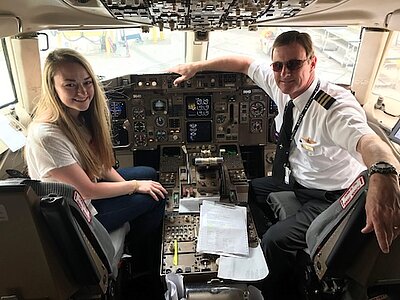
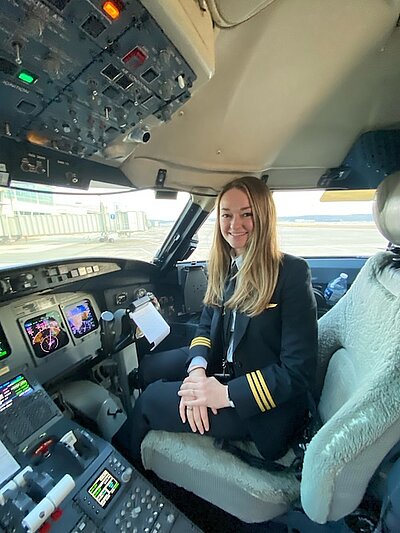
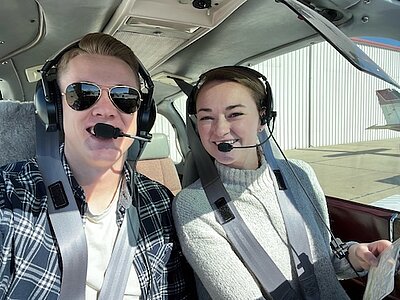
Jade grew up in Childress, Texas and earned her degree in Business Administration at LCU. She is married to her high school sweetheart, Will Foster, and they live in Oakland, California, where they both work as pilots for Southwest Airlines.
When did you know flying was more than just a hobby or interest — that it was your calling or career path?
I grew up in Childress, Texas, and my dad is a commercial pilot with Delta. Flying with him was just a cool thing to do together, so by the time I graduated from Childress High School, I already had my pilot’s license. That early connection planted the seed, but it wasn’t until later that flying felt like more than a hobby.
What path did you take after graduation to become a pilot?
I came to LCU and majored in Business. After graduation, I was searching for the right fit for me. Since I loved both travel and flying, I decided to combine my business background with aviation and become a commercial pilot, finishing all my certifications. At the start of 2020, I began working as a flight instructor, but then Covid grounded that path. Interestingly, my husband Will, who was working as an ER nurse, decided to get his pilot’s license too — so in 2020, I became his flight instructor, and he was my only student! In 2021, we both became regional pilots with SkyWest Airlines. Now, we’re both based in Oakland, California, flying for Southwest Airlines.
How did your time at LCU prepare you for your career as a pilot — whether through academics, community, or faith development?
My time at LCU was transformative, especially through the Faith in Business class taught by Matt Bumstead. That class taught me how to express my faith in a secular business environment, which has been invaluable.
Was there a faculty or staff member who walked with you during your time at LCU — someone who encouraged, mentored, or guided you along the way?
Absolutely! There were so many faculty and staff members at LCU who truly changed my life. Professors like Dr. Kathy Crockett, Matt Bumstead, Dr. Laci Richardson, and Tracy Mack, along with staff members Josh Stephens, Kecia Jackson, Rose Johnson, and Randal Dement, all poured into me in different ways. Each of them played a role in encouraging, mentoring, and guiding me, and I’m deeply grateful for the impact they had on my time at LCU and on who I am today.
Is there one flight or experience that stands out as especially meaningful in your career?
One very special moment for me was taking my 92-year-old grandfather up flying. My mom is Canadian, and he was visiting our family in Texas on what was most likely his last trip there. Even though it was just a small Cessna 150, it was a proud and meaningful experience for both of us and being able to show him my flying skills meant a lot.
Do faith or personal values play a role in how you approach your work as a pilot?
Yes, being a Christian, my faith touches everything I do. It can be challenging to open doors to faith conversations when interacting with so many people from diverse backgrounds, but I hope my Christian values reflect in how I treat co-workers and customers every day.
What type of flying do you do now, and what do you enjoy most about it?
I currently fly commercially for Southwest Airlines, based in Oakland, California. As a dual pilot family, Southwest was especially appealing to us because it aligns with our personal values and places both of us close to our base. Eventually, we hope to relocate back to Texas. As mentioned earlier, I love combining my business background with travel.
What advice would you give to other LCU students who might feel called to a path outside their degree field but still rooted in their purpose?
Stay flexible! Life can become a beautiful adventure if we allow Him to guide us in the expression we are led to.
Dudley McNeill (’73)
Dudley earned his degree in math and business at Lubbock Christian University. He came to LCU from Happy, Texas, where he still resides, and married fellow LCU student Hermion (Pierce) McNeill (’71) in June 1971. The couple had three children — Todd McNeill (’98), Amber McNeill Weems (’00), and Hannah McNeill (’05). Following Hermion’s passing in January 2007, McNeill later married Judith (Dement) Downs in June 2011.
When did you know flying was more than just a hobby or interest — that it was your calling or career path?
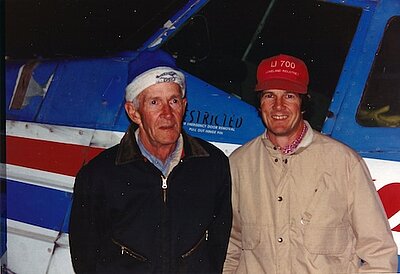
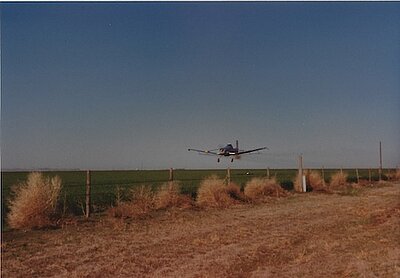
We were a farming family and my father got his pilot license and agricultural chemical application license when I was in elementary school in the early 1960’s. I grew up doing all the things a farmer/rancher kid does like driving a tractor and working cattle, but when he began crop spraying, I then began to help with the mixing of herbicides and pesticides. I also began to help with the flagging, which meant I would go to the field being sprayed and help him line up the airplane appropriately on the field, so he would know what part had been sprayed and what was left to spray on that particular field.
What path did you take after graduation to become a pilot?
I enjoyed farming and crop spraying, so it was a natural evolution for me to decide to make a career out of it. I got my pilot license while still in high school. We kept one of our airplanes at a small airport just outside of Lubbock, and I would fly home to the farm on Friday afternoons to help with farming and spraying, then I would fly back to the Lubbock area on Sunday afternoons. This helped to build up my flying hours while I attended LCU.
How did your time at LCU prepare you for your career as a pilot — whether through academics, community, or faith development.
All of us McNeill boys were taught to do our very best by our parents in work and all areas of our lives. And those lessons were reinforced while I was at LCU. The faculty and staff had high expectations, and I always tried to do my best.
Editor’s note: Dudley is one of six McNeill brothers — Dave (‘69), Tim (’78), Jim (’75), Warren (’82), and Walter (‘84).
Was there a faculty or staff member who walked with you during your time at LCU — someone who encouraged, mentored, or guided you along the way?
Les Perrin and Larry Rogers were instrumental in my years at LCU. They encouraged me and held me accountable, and their influence on me was significant.
Is there one flight or experience that stands out as especially meaningful in your career?
I’ve been flying since my teenage years – so, for about 60 years now. Over that number of years, I’ve had some interesting flight experiences.
One morning, while flying to a field to spray, a fire started somewhere inside the plane and the cabin began filling with smoke. I quickly descended and found a dirt road to land on and was able to get out before the plane completely caught fire. A different situation happened when one blade of a two-blade propeller broke off while I was in mid-air, so I had to find a good level field to land in very quickly.
Our spraying business is out in the country where our farm is located. And typically, each morning, we would go out to the plane, crank the engine, and pull the plane around to the chemical tanks to load whatever chemical was to be sprayed that day. This one time, though, we loaded the plane the previous night, and the next morning cranked the engine and immediately took off to go spray. What I didn’t know on that particular morning was that a snake had crawled into the engine area overnight. After taking off, I was headed to the field we were to spray, and I saw something strange sticking up out of the engine area, right behind the propeller. I finally figured out it was a live snake. As the engine got hotter, he began crawling out onto the cowling, and he ended up falling off the plane. It was very strange!
Do faith or personal values play a role in how you approach your work as a pilot?
I would say that being a business owner of my own agricultural spraying business has come fairly naturally for me. I was raised in a Christian home by parents who were good role models and who had high expectations of us. And the campus community at LCU also provided good mentors and a Christian environment that helped to solidify my faith and my walk. All through my life, including those years at LCU, I learned that everyone wants and deserves to be treated fairly. I have found that some relationships come pretty easily and naturally, while others may take more work. It is the same when you own a small business – I have really great customers, and it is important for me to always take care of them, to do my best for them, and to treat them with respect – sometimes that’s easy to do and sometimes it takes a little more effort, but it is always worth it.
What type of flying do you do now, and what do you enjoy most about it?
I continue to do commercial/agricultural crop spraying, and I find time every now and then to do some leisure flying. I love to fly, and getting to do that as my vocation has been a tremendous blessing in my life.
What advice would you give to other LCU students who might feel called to a path outside their degree field but still rooted in their purpose?
My advice is to always look for opportunities to be an ambassador for Jesus, no matter what you are doing. Everyone wants to be associated with or do business with someone with integrity – someone who is honest and fair and who treats everyone with respect. And the other thing I would suggest to a student these days is to choose a career that you will enjoy and then go at it 110%.
Tim McNeill (’78)
Tim earned his bachelor’s degree in Bible at Lubbock Christian University. He came to LCU from Happy, Texas, where he met and later married fellow LCU student Debra (Wynn, ‘79). Together, they have two sons, Kevin and Nathan, a daughter-in-law, Lisa, who is married to Kevin, and a granddaughter, Charlotte. He resides in Haslet, Texas, in the DFW metroplex.
When did you know flying was more than just a hobby or interest — that it was your calling or career path?
I grew up around flying. My family farmed, ranched, and ran a crop spraying business. Beyond the spray plane, we also had a small J-3 Cub, and my dad would take me up in it to teach me how to fly. I soloed after graduating from high school and received my pilot’s license. So, I was already flying before I came to LCU as a freshman. I had not decided on a major, because – I think in the back of my mind – I figured I would return to the family spraying business. I ended up becoming a Bible major without a lot of forethought – I was running for a student senate office my junior year, and the form I had to complete to run for office indicated that I had to list my major. I figured since it was a Christian college, Bible was the most sensible major and besides, it would serve me well in life. And it has.
What path did you take after graduation to become a pilot?
I continued to assist with the family crop spraying business while still in college. After graduating, I began working with my father and older brother (Dudley, ’73) and spent the next 10 years crop spraying, ranching, and farming. It was then that I began to have an interest in flying larger aircraft. And within 6 months involving intense work and training, I was a pilot on the Boeing 727.
How did your time at LCU prepare you for your career as a pilot — whether through academics, community, or faith development.
You learn all sorts of life lessons as a college student, and during my freshman year, I served as a student photographer. My sophomore year, I was a student photographer and was also responsible for running the Photography Lab, which was actually housed in the Arnett House before it was moved and renovated. We would take and develop most all the photos that were used for the yearbook and The Duster, as well as other projects and publications as needed. We learned how to respond well to those for whom we worked; we learned how to work as a team of photographers; and we learned how to treat people well in a variety of situations.
I would say that I came to LCU with a robust background in knowing how to treat people and how to represent Jesus well, but the community I experienced and the varied opportunities and responsibilities that I had at LCU prepared me even more for life after graduation.
Was there a faculty or staff member who walked with you during your time at LCU — someone who encouraged, mentored, or guided you along the way?
Dr. Leon Crouch was an influential faculty member for me as a Bible major, and Les Perrin gave us good advice for how to retain information and be ready for his infamous exams. He told us to “read over your class notes every day, and you’ll have no problem doing well on my tests.” His advice for studying has served me well in life. And Vernon Brown, who was a public safety officer on campus, and Don Umphrey, Director of the Public Information Office, both ended up being good life-long friends.
Is there one flight or experience that stands out as especially meaningful in your career?
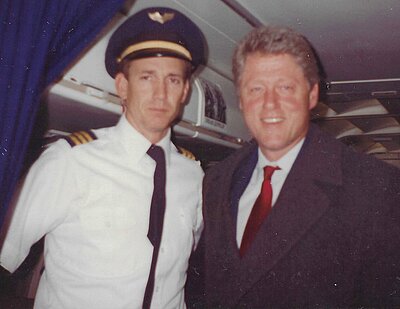
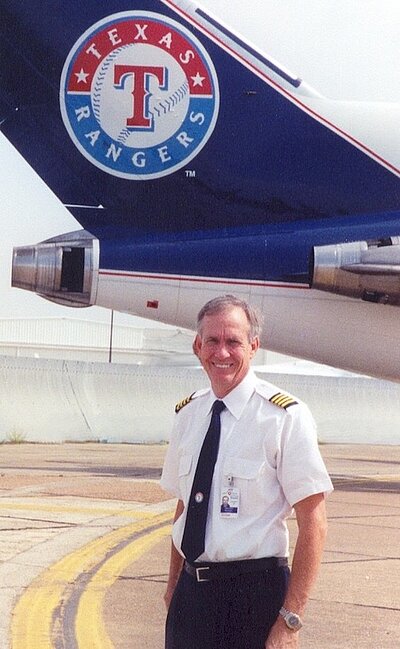
Over my career of flying, I have had the privilege of piloting jets with some famous folks on board. When Bill Clinton first ran for president, my company was hired to fly him around during his campaign, we ended up in Little Rock the night he was elected. We provided airlift for the performer, MC Hammer. Our company also was hired to fly professional sports teams. Over the years, I’ve flown the Houston Rockets, Texas Rangers, Dallas Cowboys, Arizona Diamondbacks, Colorado Rockies, Dallas Stars, and Seattle Mariners. The most unusual passengers were some live Dolphins for Sea World.
Do faith or personal values play a role in how you approach your work as a pilot?
Is there really any way to separate your work and your faith? I’m a Christian who pilots airplanes. The way I treat people should always represent Jesus well. I am currently working with a co-pilot who likes to talk about all sorts of topics, and sometimes our conversations turn to Biblical stories and faith. If you have to tell someone that you are a Christian, you probably aren’t living it all that well.
What type of flying do you do now, and what do you enjoy most about it? I have flown a variety of airplanes and jets over the past 40 years: single-engine propeller-driven planes – Cessna Ag Truck spray planes, Cessna 210, and J-3 Cub. Then I began flying jets – 727’s, 737’s, 757’s, Challenger Business Jets and other small jets. My favorites were the Cub, Ag planes, and the 757.
I’m enjoying my present role as much as any I have had because it allows me to really get to know those whom I am transporting. I currently serve as a private family pilot, and that allows much more opportunity to build a relationship with my passengers.
What advice would you give to other LCU students who might feel called to a path outside their degree field but still rooted in their purpose?
Plant Kingdom seeds where you are because ministry opportunities are everywhere all the time. Pay attention to the people you cross paths with every day, because you never know what is going on in someone’s life and that they may need a little extra attention or assistance.
When I first started flying large jets, my schedule was often to fly for a full week at an outstation and then to be off for a week, which meant I was away from home a lot. There was an acronym bantered about by some of the pilots I flew with – AIDS (Airline Induced Divorce Syndrome). I was very intentional about calling home every day to visit with my wife and my sons. And at that time, it could be very costly, because long-distance calls—which are no longer a thing—were very expensive. But I viewed it as a good investment in my family. It was my “marriage insurance.” My advice is to invest heavily in your family.
Because of a temporary assignment, my company moved our family to Brussels where we lived for a little less than 2 years. Our boys were elementary school and early high school-aged at the time. During that experience, we tried to instill in our sons that this is something “we don’t have to do, it’s what we get to do,” always reminding ourselves of the great opportunities we were “getting” to experience. We learned to rely on each other, and we learned to really appreciate the cultural lessons in which we were immersed. Our perspectives of the world were broadened considerably by those experiences as well as other opportunities to share cultures in other countries over the years. Take every opportunity to broaden your perspective and to continue learning.
Tom Moudy (’67)
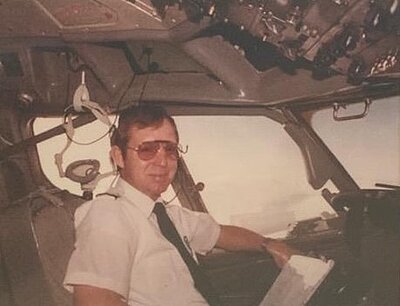
Tom (Robert Thomas Moudy III) attended then–Lubbock Christian College starting in 1965, when the institution was still a two-year school. An agriculture student during his time at LCU, Moudy later completed his degree in biology at West Texas State University (now West Texas A&M University). A 1965 graduate of Happy High School in Happy, Texas, he came to LCC that fall. While finishing his degree, Tom married his wife, Sandy. He has a notable family connection to LCU — his grandfather, Robert T. Moudy, Sr., was an uncle to F.W. Mattox, LCU’s founding president, and completed the waterworks for the campus. Now retired, Moudy resides in the Fort Worth area.
When did you know flying was more than just a hobby or interest — that it was your calling or career path?
My father flew B-17s and B-24s out of Italy, so I was always interested in flying. As a young boy, I put together every model airplane kit I had access to.
While I was at LCU, that interest really grew. The campus was surrounded by cotton patches, and I hauled cotton to be ginned west of campus. I would see T-38s and T-37s flying in and out of Reese Air Force Base, and I’d just sit and watch them.
What path did you take after graduation to become a pilot?
While I was finishing my degree at West Texas State, I received my draft letter for Vietnam. I was given permission to finish my last semester and graduate before entering the military.
I went through officer training at Vance Air Force Base in Oklahoma, where I earned my pilot’s license, and then trained on the KC-135 Stratotanker at Altus Air Force Base, flying air-to-air refueling missions. I was deployed to Thailand and other Southeast Asia locations, flew 103 combat missions, and later served as a military instructor pilot.
Is there one flight or experience that stands out as especially meaningful in your career?
Flying 103 combat missions in Southeast Asia and later serving as a military instructor pilot were experiences that really shaped me, both as a pilot and as a person.
Do faith or personal values play a role in how you approach your work as a pilot?
In piloting, every day is a challenge, and I approached that responsibility with purpose and humility.
What type of flying do you do now, and what do you enjoy most about it?
I’m retired now. As I was approaching my 32nd birthday, I had to decide whether to stay in the military or move into commercial aviation. At the time, you had to be hired before turning 32 to fly the 737, so that’s the path I chose.
I flew for Southwest Airlines for 25 years, based primarily at Dallas Love Field, flying 737-200, 300, 500, and 700 aircraft. For one year, I was based in Houston flying a 727. I was type-rated on several different aircraft models.
After Southwest, I flew for V.H. Harman Jr. for seven years, who was involved in fundraising for LCU. I also spent a year flying for General Dynamics, flying a once-a-week trip out of Fort Worth to Brussels, Belgium, through Carswell Air Force Base during the Cold War.
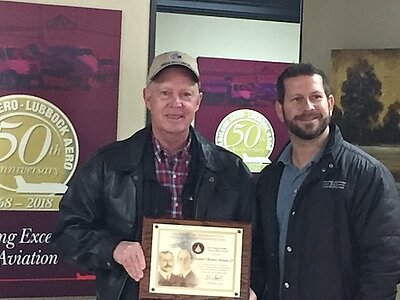
I was honored to receive the FAA Wright Brothers Master Pilot Award, which recognizes 50 years or more of flying with no incidents involving aircraft or personal injury.
What advice would you give to other LCU students who might feel called to a path outside their degree field but still rooted in their purpose?
If you have something in you, God has His way of preparing you in your field. If you’re interested in something, you work at it, and God sends you in the direction you’re meant to go.
Caleb Posey (’17)
Caleb came to LCU from Rotan, Texas, and graduated with a BBA in Economics. He married Currie Stevens in April 2026, who also offered her perspective throughout this interview. He is currently serving in the U.S. Army stationed at Fort Hood in Killeen, Texas.
When did you know flying was more than just a hobby or interest — that it was your calling or career path?
Caleb: Honestly, I have no idea. About a year after graduation, I realized I wasn’t cut out for office work. I was restless and wanted to see and do more. So, I enlisted in the Army as a helicopter mechanic, and things just went on from there.
Currie: While his siblings were coloring quietly, he was running a full-on Lego heliport with runways, landing strips, and remote-control helicopters. The career path basically chose him.

What path did you take after graduation to become a pilot?
Caleb: After graduation, I worked as a credit analyst in Amarillo for about a year. I felt called to do more, so I enlisted as an Apache helicopter mechanic with a vague hope of flying someday. After three years, I was selected for Warrant Officer Candidate School, then flight school. Upon graduating, I chose the AH-64E Apache as my advanced airframe, which I’ve been flying since 2022. My years as a mechanic and crew chief on the Apache really helped me as a pilot.
Currie: He walked into the Amarillo Army recruiting office with one bold plan: fly Apaches. Recruiters hear that every day, so he knew the road would be lengthy. To get as close as possible, he enlisted as an AH-64 mechanic. He was deployed to Korea, where he spent long days turning wrenches and learning every bolt and blade on the Apache. Eventually, he sent in his flight school packet to Fort Rucker, Alabama. Four weeks later, living in a tent and calling it “character building,” he finally got Wi-Fi long enough to check his email and learned he was accepted. Nervous and excited — flying the military’s most expensive and angriest lawnmower? Totally fine.
How did your time at LCU prepare you for your career as a pilot — whether through academics, community, or faith development?
Caleb: The study habits and time management skills I developed at LCU have been incredibly valuable. The interpersonal skills I gained as a student and IK club member have been vital as well. Most importantly, LCU helped my faith become my own. I grew up in the Church of Christ, but my faith really took root when I was away from my parents, and the Christian community at LCU helped me establish good spiritual habits that continue to guide me.
Currie: LCU shaped him more than he realized. Being in a faith-centered community of encouragement and character kept him grounded and helped him develop a resilient mindset. He paid his own way and worked full time while in college. With five siblings and no handouts, that built the discipline he needed later. Flight training has brutal evaluations and requires people who can think clearly under pressure — having a degree from LCU helped Caleb stand out professionally.
Was there a faculty or staff member who walked with you during your time at LCU — someone who encouraged, mentored, or guided you along the way?
Tracy Mack, the Dean of the College of Business, provided invaluable counsel and support. Also, Dr. Russell Dabbs and Dr. Brian Starr were professors I’m deeply grateful to have learned from.
Is there one flight or experience that stands out as especially meaningful in your career?
My first flight in an AH-64 stands out. When I was a helicopter mechanic, my troop commander, Captain Nait Brown, was incredibly supportive of my goal to go to flight school. After I was selected, he became an Apache Instructor Pilot. On the first day I was scheduled to fly the Apache, Captain Brown surprised me by showing up and taking me out for that first flight. That was pretty incredible.
Do faith or personal values play a role in how you approach your work as a pilot?
My faith and personal values define my approach to life. Whatever I do, I try to work heartily, as for the Lord and not for men (Colossians 3:23). I strive to live with integrity and be an example of Christ, whether planning flights, performing duties, or anything else.
What type of flying do you do now, and what do you enjoy most about it?
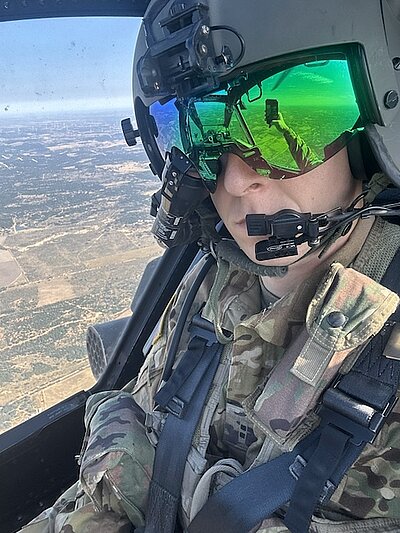
I fly Apaches as a military helicopter pilot. I enjoy the dynamic nature of the job — no two flights are the same. I’ve flown helicopters across the U.S. and Europe, in all kinds of weather and altitudes. I’ve worked alongside aviators from many countries, and the opportunities I’ve had are incredible.
What advice would you give to other LCU students who might feel called to a path outside their degree field but still rooted in their purpose?
When you allow God to guide your steps, finding your passion will open doors you never imagined and lead to a blessed life. It won’t always be easy, but as Romans 8:28 reminds us, “all things work together for good to them that love God, to them who are called according to His purpose.”