
Faith at the Core
Since 1957, the student experience at Lubbock Christian University has been anchored in Christian truth. From the university’s founding, every graduate—regardless of major—has taken Bible courses at LCU, a tradition that remains foundational to the university’s calling.
“A vital part of our mission is engaging non-majors through our general curriculum courses,” shared Dr. Jeff Cary, Dean of the Alfred & Patricia Smith College of Biblical Studies. “We aim to help each student grow in love for God, encounter Him through Scripture, embrace a life of discipleship and service, and develop a theological foundation for navigating a complex world.”
Of course, the Smith College of Biblical Studies also specializes in training the next generation of ministers, missionaries, and church leaders through rigorous theological study. Yet across denominational and state lines, the modern church in America faces a shortage of young people pursuing vocational ministry.
“We are currently experiencing a nationwide decline in the number of students seeking full-time ministry,” Dr. Cary said, “though we see signs of hope that this trend could turn in a more positive direction with this rising generation.”
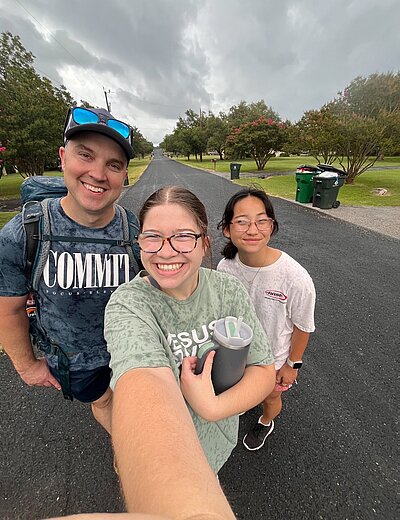
No small part of that hope is embodied in LCU’s current ministry students. For Biblical Text majors like Ruth Blayee, Cameron Davis, and Brooklyn Turner, their formation within the Smith College of Biblical Studies has prepared them well to serve both the church and the world.
Each of these students began discerning their calling during high school. During the isolation of the pandemic, Ruth discovered a love for deep Bible study, which awakened a sense of calling within her. “I wanted God’s plan,” she recalled, “and I knew in my heart that His plan for me was ministry.”
Brooklyn discovered her passion for mentoring younger students while working with middle schoolers in her youth group. At the same time, she found herself walking alongside a classmate experiencing homelessness. Together, these experiences stirred within her a desire to dedicate her life to serving others.
Cameron’s calling unfolded more gradually. “When I was younger, I convinced myself that I could do ministry in any job, which, of course, is true. But as I grew older, I realized that was more my will than God’s. Through difficult seasons and a deep search for meaning—examining my gifts and my upbringing—it became clear that God was calling me to give up the things I had been chasing and pursue a path of full-time ministry.”
Because ministry is deeply relational, Ruth notes that the community she has found at LCU has played a vital role in preparing her for future service. “The relationships I’ve formed with peers, faculty, and staff are invaluable,” she shared. “The very people who have helped shape my faith and confirm my calling are those whose lives reflect the Gospel they proclaim. The lived faith of my professors, in particular, inspires me to greater dedication and reminds me that my classroom work is ultimately about serving God’s people.”
“LCU has shaped my calling by giving me other voices to lean on,” echoed Brooklyn. “The Bible department is filled with professors who teach from their own ministry experience and personal lives. Hearing honest testimonies about both the joys and the challenges of ministry has made me increasingly eager to step into it myself.”
For Cameron, who is already involved in a local college ministry, LCU has broadened his understanding of what faithful service might look like after graduation. “I love working with young adults,” he shared, “but I also feel drawn to preaching and executive ministry. I’m passionate about developing sustainable ministry practices and would love the opportunity to lead a church in that way. I also love teaching and hope to someday have the same impact on students that my professors have had on me.”
Even for students not called to full-time ministry, LCU’s general education Bible courses offer deep spiritual formation. All students complete four core courses: Introduction to the Old Testament, Introduction to the New Testament, Christian Heritage, and Christian Life
“Our Old and New Testament courses ground students in the story of Scripture, drawing them into God’s relational call and His redemptive work through Jesus Christ,” Dr. Cary explained. “Christian Heritage introduces students to the history of Christian engagement with Scripture, key theological concepts, major developments in church history, intellectual challenges to faith, and inspiring examples of faithful Christians. It also addresses the unhealthy individualism in our culture that runs counter to Scripture and undermines spiritual formation. Christian Life invites students to live more fully into Jesus’ call to faithfulness, transformation, and participation in His Kingdom work. We want students to leave with a strong sense of vocation—of calling, whatever field of work they are entering.”
“While we hope students gain knowledge through these courses,” Dr. Cary emphasized, “our ultimate goal is far deeper: to invite them into a vibrant relationship with God and His mission in the world. Our faculty—both full-time and adjunct—are energized by this calling, and students consistently offer very positive feedback about their experiences in these courses.”
Beyond the core curriculum, students may take additional Bible courses as electives, and the Smith College of Biblical Studies offers several minors for those who wish to deepen their theological understanding and pastoral skills. These opportunities help prepare the broader student body to serve more faithfully in their churches and communities. Still, there is a significant and ongoing need for those willing to enter full-time ministry.
“There are many factors contributing to the recent decline in students pursuing vocational ministry,” Dr. Cary noted, “but one thing is clear: mature Christians play a critical role in recognizing and calling out the gifts of young people. Most of our Bible majors report that God called them to ministry largely through adults in their lives who recognized their gifts and encouraged them to consider ministry. In a time of ministerial shortage, we cannot underestimate how important it is for seasoned believers to encourage gifted young people rather than discourage them from offering their lives in service to God.”
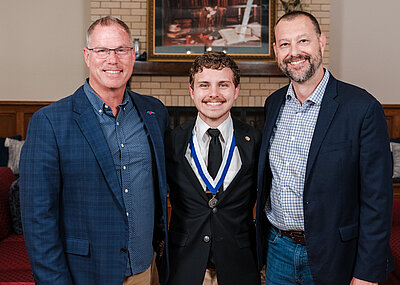
“Please consider connecting us with students you know who show signs of giftedness for ministry,” he added. “It takes all of us.”
Through internships, classes, conversations, and prayer, LCU’s ministry students are not only deepening their own spiritual journeys—they are also learning to guide others.
“I wish I had known earlier that I was allowed to ask questions,” Brooklyn reflected. “I often doubted my calling because I entered LCU with basic Bible knowledge and many questions about faith and Scripture. At first, I felt ashamed to ask questions, thinking I was alone. Over time, I’ve come to deeply value having space to question within a life-giving community of fellow seekers who also have questions.”
For each of these students, there is comfort, strength, and excitement in knowing their path is not one they walk alone. God has been guiding them all along—often through professors, peers, and mentors at LCU.
“My greatest hope is that God will show me how to use the gifts and passions He’s given me for the glory of His Kingdom,” Ruth shared. “I hope to help nurture spaces where Christian faith and God’s mission to a broken world are both deeply considered and genuinely lived.”
“I hope to be a faithful, pastoral voice in my future ministries,” Cameron added. “I pray that the Holy Spirit will work through me, using me as a tool for His Kingdom work. It’s easy to dream about making a big difference,” he reflected, “but I trust that God, in His infinite creativity, will do far more through me than I can ask or imagine.”