
The Silent Architect of Ethical Research
For many Lubbock Christian University students, research begins with curiosity, a question sparked in a classroom discussion, a clinical experience, or a lived reality that they want to understand more deeply. What they may not realize at first is that behind every successful research project involving people is a careful, formative process designed to protect participants and shape ethical scholars. At LCU, that process is guided by faculty mentors and overseen by the Institutional Review Board (IRB), chaired by Jennifer “Jennie” Dabbs, Ph.D., Professor of Sociology and Honors College faculty member.
When Dr. Dabbs joined LCU in 2001, she brought with her a deep commitment to teaching and scholarship in sociology, with research interests grounded in gender analysis and the lived experiences of people in diverse cultural and social contexts. Over the years, she has mentored countless students in original research, guiding projects that explore topics ranging from microaggressions on small private university campuses to questions of power, leadership, and social identity. That same commitment to thoughtful inquiry now shapes one of her most influential roles on campus: helping students learn how to conduct research ethically and responsibly.
As chair of LCU’s Institutional Review Board since 2013, Dr. Dabbs serves as a steward of both academic integrity and student learning. Institutional Review Boards exist to ensure that research involving human subjects complies with federal ethical standards and safeguards participants from physical, psychological, or social harm. At LCU, this responsibility extends across disciplines and degree levels, touching undergraduate honors theses, graduate capstone projects, faculty scholarship, and collaborative studies with institutions nationwide.

Established in 2008, LCU’s IRB includes faculty representatives from across campus, an external community member, and oversight for both human and animal research, with Dr. Andy Laughlin, Chair of Natural Sciences, coordinating the animal research component. Through the IRB, faculty and students receive National Institutes of Health training in the ethical treatment of human subjects, and the university holds a Federal Wide Assurance through the Office for Human Research Protections, allowing LCU researchers to collaborate broadly while maintaining rigorous ethical standards.
For students, however, the IRB process is far more than a regulatory step. It is an extension of mentorship.
“One of the greatest privileges of serving on the IRB committee is mentoring our growing body of student researchers,” Dr. Dabbs says. “They have so many exciting questions about human beings they want to answer. Our job is to help them find the best way to do that research while protecting the rights of their participants.”
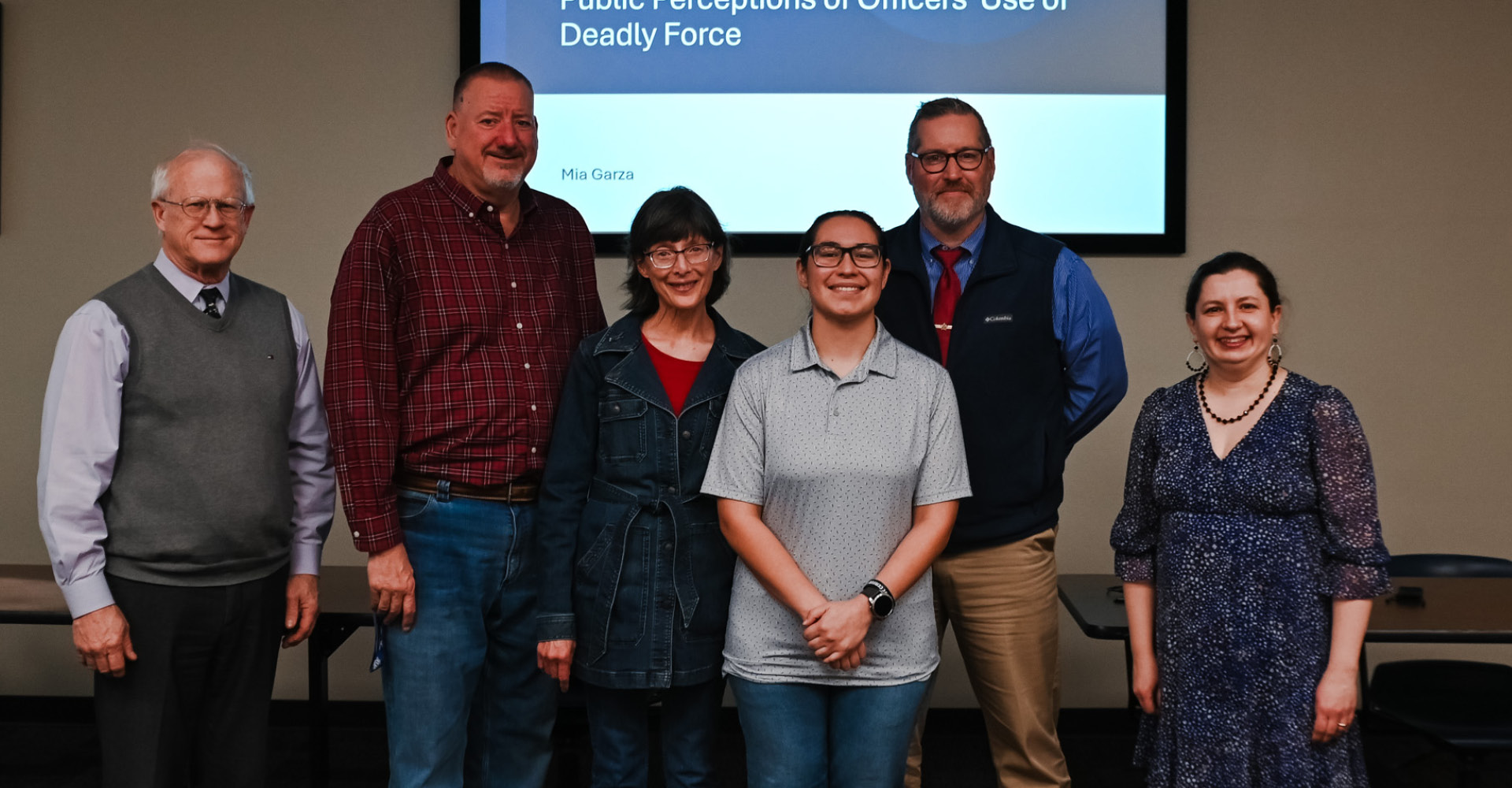
That guidance is evident in the experiences of students like Mia Garza, a Criminal Justice major who graduated in December after completing her Honors thesis, The Impact of Simulated Experience on Public Perceptions of Officers’ Use of Deadly Force in Texas. Working alongside Assistant Professor of Criminal Justice Dr. Ray Scifres, Garza designed a study using video-based simulated scenarios to examine how participants’ perceptions changed before and after being placed in a high-stakes decision-making context.
Because the project involved human participants and sensitive subject matter, it required careful ethical review. Garza credits Dr. Dabbs and the IRB committee with helping her navigate that process successfully.
“Dr. Dabbs was extremely helpful throughout the process,” Garza says. “She was willing to guide me through each individual step and answered many of my questions. She was always very supportive of what I wanted to do with my project, but she also raised questions I needed to keep in mind while preparing for the IRB submission.”
That balance—encouraging student ownership while sharpening ethical awareness—is central to the IRB’s educational role. Garza recalls sitting down with Dr. Dabbs to walk through revisions requested by the committee, gaining insight not only into compliance requirements but into the deeper responsibility that researchers have to participants.
“The committee brought up nuances I never would have thought to address,” she says. “I don’t think I would have made it through the IRB in time without her help.”
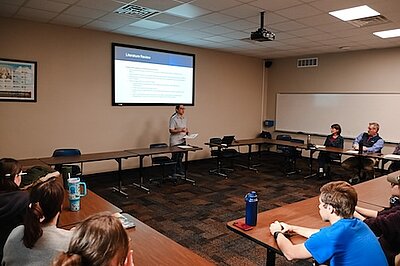
Students across disciplines share similar experiences, including those in LCU’s growing graduate programs. In the Doctor of Nursing Practice program, Associate Professor of Nursing Dr. Janice Marchildon mentors cohorts of students through complex, evidence-based research projects that directly impact patient care. Each of those projects must pass through the IRB before data collection begins.
“Mentoring students through the DNP process is beyond words, both incredibly rewarding and challenging,” Marchildon says. “The degree to which we ‘walk with them’ while still encouraging autonomy through their scholarship transformative experience is a very tight balancing act.”
That partnership between faculty mentors and the IRB allows students to experience the full arc of scholarly research—from proposal to implementation to dissemination—while learning to navigate ethical decision-making along the way. One DNP student, Chrissy Shupak, describes the process as both clear and empowering.
“The feedback from the committee and my mentor was clear and concise,” Shupak says. “It made it simple to redirect my project proposal to align with standards for the exempt review.”
Each year, student research approved through the IRB is showcased at LCU’s Scholars Colloquium and presented at professional conferences across the country. In 2025, the IRB reviewed 16 new projects from students and faculty across the fields of nursing, biblical studies, business, criminal justice, and psychology. As graduate offerings expand, so too does the scope and impact of student-led research guided by ethical oversight.
Doctor of Nursing Practice Cohort Research Projects
The following research projects were developed by advanced practice nurse practitioners in the second cohort of LCU’s Doctor of Nursing Practice program. These students received IRB approval in the fall and are implementing and collecting data this semester, with findings to be disseminated during their final semester before graduating in August 2026. Each project is guided by a structured, evidence-based clinical research question that directs the study design and outcome measures.
Below are summaries of each student’s research question, highlighting the population studied, the intervention or focus, and the outcomes being measured.
Amanda Hector
In patients receiving spinal cord stimulators for radicular pain, how does pre-procedure education compared to PRN education affect pain perception and functionality over two months?
Chrissy Shupak
In elderly patients in rural healthcare settings, how does telemedicine compared to traditional in-person visits affect treatment adherence?
Sharronda Bradford
In newly diagnosed adult cancer patients receiving chemotherapy, will a standardized chemotherapy education tool improve patient comprehension, as compared to current practice?
Chris Ackerman
How does air medical crew member remedial training using point-of-care ultrasound affect decision-making during patient care, as compared to no ultrasound use?
Erin Gonzales
In Medicare-eligible patients with Type 2 diabetes, how does participation in chronic care management impact hospital admissions and ER visits, as compared to non-participation?
Christina Pauda
In patients with chronic inflammatory arthritis, how does access to a language-specific educational tool affect understanding and adherence, as compared to standard education over three months?
Victoria Sellers
In adult patients with rib fractures, to what extent does initiating a rib fracture protocol within 12 hours of hospital admission reduce pneumonia incidence, as compared to delayed or no protocol?