
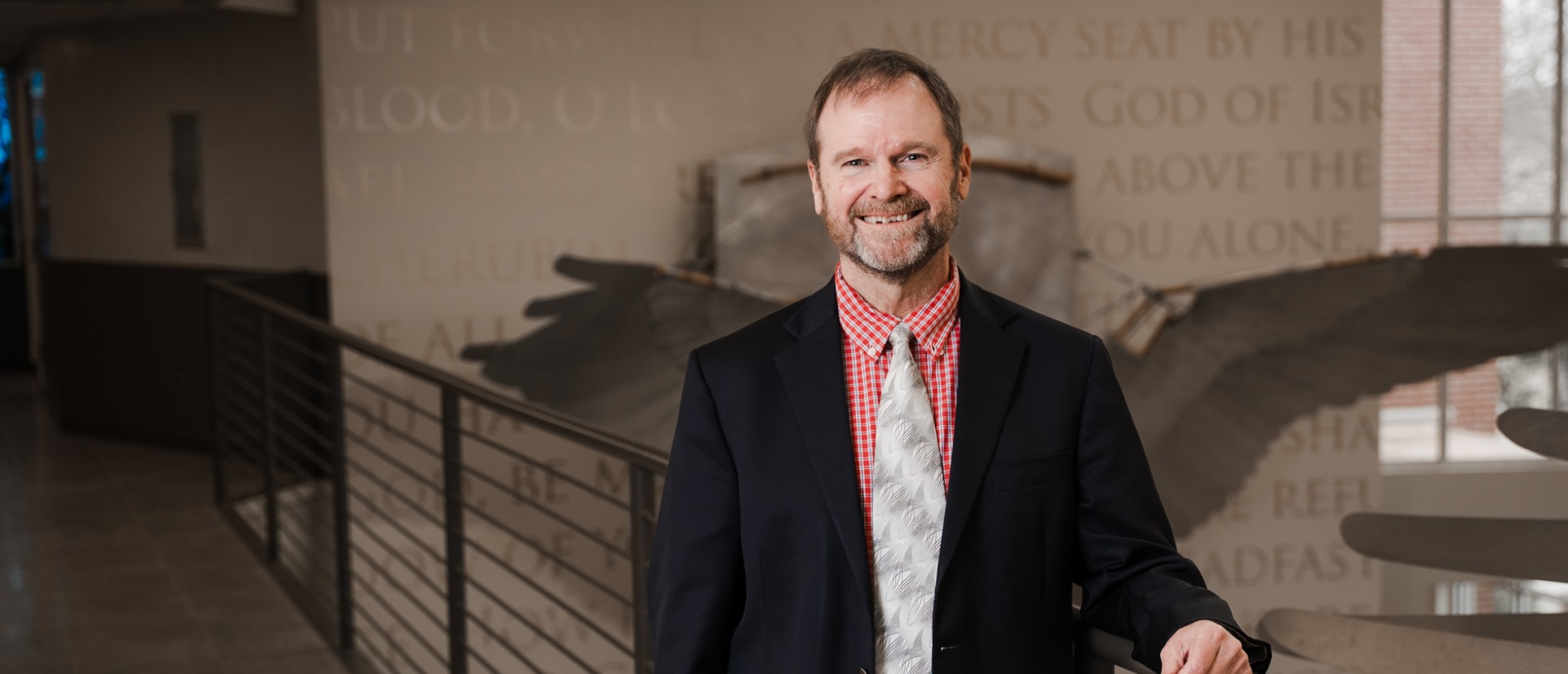
A Life in Wisdom Studies
By Guest Writer: Brandon L. Fredenburg, Ph.D., Professor of Biblical Studies
At the end of Ecclesiastes, its editor briefly praises “the Teacher” whose words he compiled to instruct “his son” in wisdom. In an often-quoted phrase, the compiler warns that “the writing of many books is endless, and excessive study is wearying to the body” (12:12). Those who know LCU Professor of Biblical Studies Dr. Mark Sneed find an amusing irony in these words.
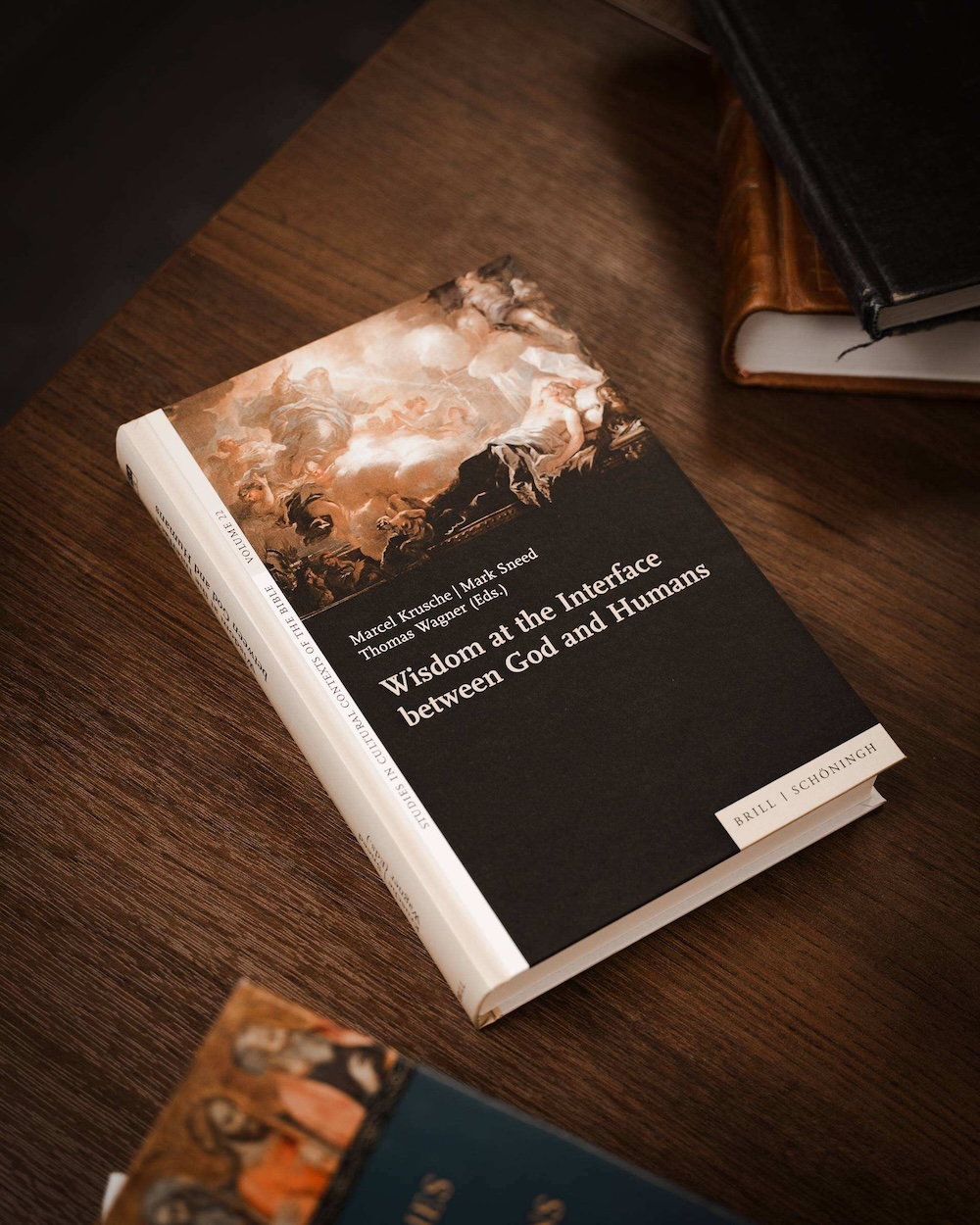
Mark Sneed is among the world’s leading Qoheleth (Ecclesiastes) and Old Testament Wisdom literature scholars. His guild contributions are prolific. At the end of 2025, Mark had the following in press: at least thirteen chapters or articles in edited volumes and encyclopedias, two books on Wisdom studies (as co-editor), and a commentary on Job in The New Oxford Commentary on the Bible. These join three authored and three co-edited books, 16 refereed articles, 22 articles in edited volumes and encyclopedias, nearly 60 academic conference papers, 20 invited keynote, lecture, and plenary presentations, and well over four dozen book reviews. Research and writing continue on his Ecclesiastes commentary for the Oxford Bible Commentary series, commissioned in 2024.
Since 2016, Dr. Sneed has presented at international conferences and universities in Austria, Bulgaria, Canada, The Czech Republic, England, France, Germany, Italy, The Netherlands, Poland, Scotland, South Africa, Sweden, and Switzerland. He has served as a reader, referee, and reviewer for multiple leading journals and publishers, including Brill, Cambridge University Press, Catholic Biblical Quarterly, Journal of Biblical Literature, The Journal of Theological Studies, Oxford University Press, Restoration Quarterly, Scandinavian Journal of the Old Testament, Science & Christian Belief, Stone-Campbell Journal, and Vetus Testamentum. In March 2024, Dr. Sneed received the John G. Gammie Distinguished Scholar Award from the Southwest Commission on Religious Studies, which represents five states and several learned societies. In recognition of his scholarship in and influence over the field of Israelite Wisdom Studies, Oxford Bible Commentary series editor Steven McKenzie invited Mark to write their commentary on the wisdom book of his choice. His volume on Ecclesiastes is in production.
The timing of Mark’s education as a biblical scholar was instrumental to his current success. He earned his B.A. in Biblical Languages at Lipscomb in 1983, M.A. in Biblical Studies from Harding University Graduate School of Religion in 1986, and his Ph.D. from Drew University in 1990. At Lipscomb and Harding, Mark learned a historical-linguistic approach, which he used in his 1986 M.A. thesis, Qoheleth’s “Golden Mean.” Also at Harding, Mark became aware of a methodological maelstrom occurring in biblical studies. Throughout the 1980s, scholars increasingly adopted and adapted interpretive methods used in other disciplines including anthropology, classical rhetoric, economics, history, literature, philosophy, political science, and the social sciences. These disciplines asked questions and pursued answers unavailable through biblical scholarships’ traditional historical-linguistic approach. Mark’s familiarity with strengths and weaknesses of various methods convinced him to adopt an interdisciplinary approach to his scholarship. Like Qoheleth before him, Dr. Sneed operates with a skepticism toward methods and philosophies that over-promise and under-deliver.
In his most recently published book, Taming the Beast: A Reception History of Behemoth and Leviathan (De Gruyter, 2021), Dr. Sneed explores his long-held interest in Job’s monsters, Behemoth and Leviathan. Asked by the International Organization for the Study of the Old Testament to present a paper on the reception of an aspect in Job studies, Mark used both Reception Theory and Monster Theory to examine how Job’s behemoth and leviathan had become tamed in popular and scholarly understandings as a mere crocodile and hippopotamus. He read the paper in Stellenbosch, South Africa, in September 2016 and expanded it into the well-received 2021 book.
His book continues to generate interest. In December 2025, Mark fielded questions in an online interview about Taming the Beast from a New York University undergraduate class in religious studies; it was a required textbook. Upcoming in November, for the Society of Biblical Literature meeting in Denver, Mark helped create a joint session of the Biblical Literature and Cinema study group and the Social Sciences and Interpretation of the Hebrew Scriptures group, where he is scheduled to present his paper, provisionally titled, “Between Two Monsters.”
Although his list of publications and calendar of presentations seems endless, Mark pursues other interests to avoid ‘weariness of the body.’ In the past, he was an adept race walker and enjoyed woodturning. These days, he regularly arrives early on campus to lift weights and run “to keep his bones strong.” An avid movie-goer, he watches new releases with department colleagues; most recently Sam Raimi’s horror-comedy Send Help was up; before that, Predator: Badlands. He also finds time to enjoy Duplicate Bridge tournaments.
By his own admission, Mark Sneed is near the pinnacle of his career. His scholarship has permanently affected the direction of Israelite Wisdom Studies. Yet, when asked, “What legacy would you like to leave?”, Mark expresses his hopes in terms of family and relationships, not guild accolades. Continual engagement with Qoheleth’s folk-philosophy over four decades has brought him to a settled conclusion: Qoheleth critiques self-serving folk-wisdom. Wisdom is about understanding the limits of what human labor, human aspirations, and human attempts to master the world achieve by themselves. Ultimately, their value dissipates. Genuine wisdom is God-fearing and promotes responsible ethics.
“Having heard everything, the conclusion is this: Fear God and keep his commandments, because this is the whole duty of all people” (Eccl 12:13).