
Expanding Scholarship Through Teaching
By Guest Writer: Tracy Mack, Dean, College of Business
Universities across the country serve as centers of knowledge creation and dissemination, where faculty are expected to excel as teachers and as researchers. Traditionally, scholarly work has been defined primarily as research and publication, often referred to as the scholarship of discovery. This model has shaped promotion standards and professional expectations across higher education for decades. Yet at a teaching-focused university such as Lubbock Christian University, scholarship takes on a broader meaning, one that reflects the university’s commitment to teaching, mentoring and developing the whole person.
At LCU, the daily work of faculty extends far beyond traditional research. Faculty devote substantial time to teaching, mentoring students, advising, developing programs, and serving the university community. These responsibilities lie at the heart of LCU’s mission of educating the whole person. While research remains important, faculty at teaching-first institutions often face two fundamental questions: How do faculty balance the need for excellent classroom teaching with the need for scholarly discovery, and how can meaningful scholarship grow naturally out of a mission centered on teaching and student development?
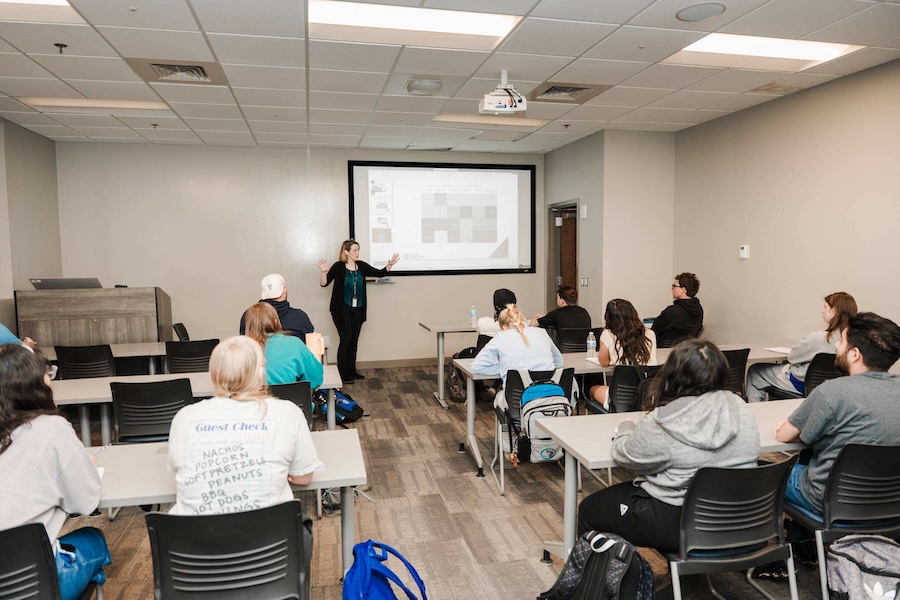
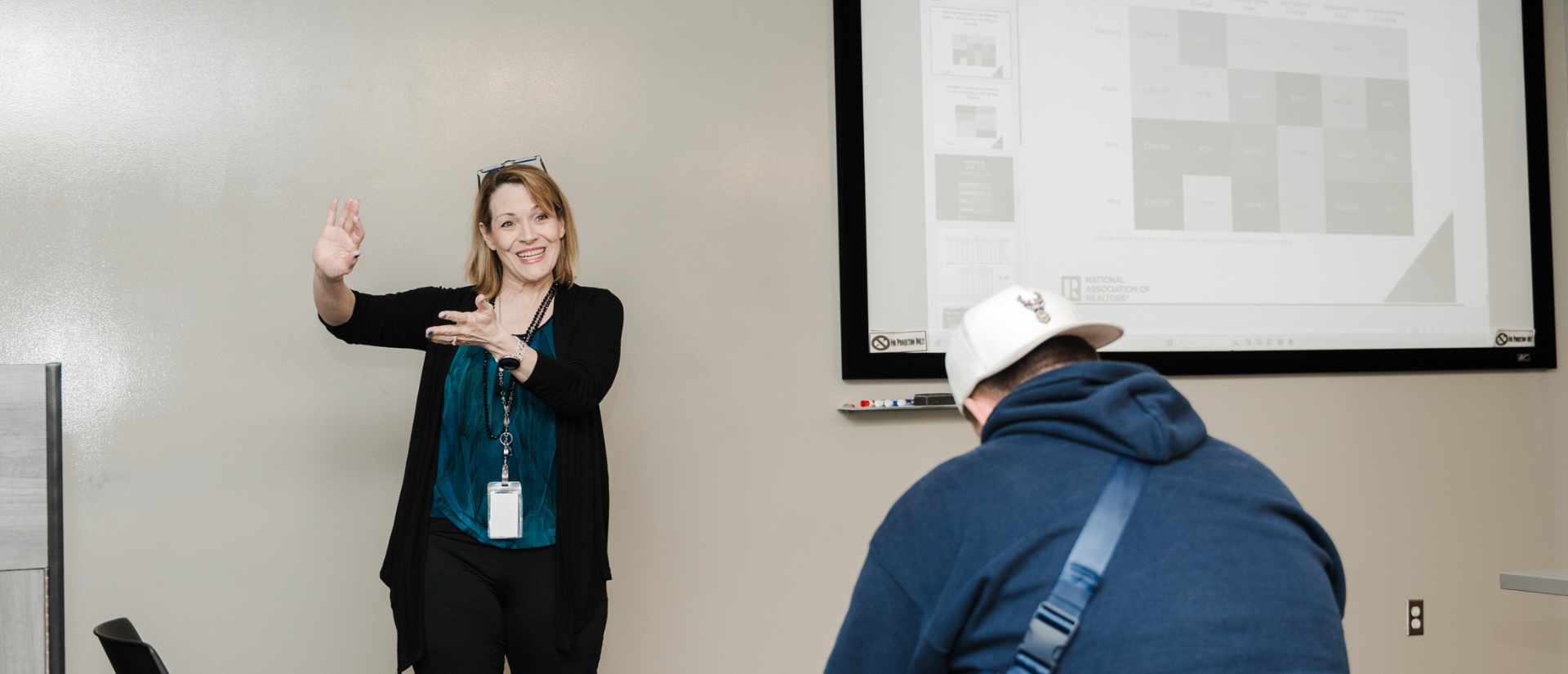
Dr. Caren Fullerton, Associate Professor of Business at Lubbock Christian University, has spent years exploring these questions. Having taught at LCU since 2004, Dr. Fullerton has long been interested in the relationship between excellent teaching and meaningful scholarly work. Over time, she began asking how faculty at teaching-centered institutions could pursue scholarly activity in ways that strengthen both their disciplines and their teaching.
Former LCU Provost, Dr. Foy Mills, Jr., encouraged faculty to explore the work of educational scholar Ernest Boyer, whose influential framework redefined scholarship beyond traditional research. Boyer argued that academic scholarship should include the full range of faculty work and identified four complementary forms:
- Scholarship of Discovery – traditional research and publication
- Scholarship of Integration – connecting knowledge across disciplines
- Scholarship of Application – applying knowledge to real-world problems
- Scholarship of Teaching – improving and sharing effective teaching practices
Rather than replacing traditional research, the Boyer Model broadens the definition of scholarship to recognize the intellectual rigor involved in teaching, application, and interdisciplinary work.
For Dr. Fullerton, the Boyer Model provided language for something she had already experienced in the classroom. Many of the most meaningful academic questions she encountered grew directly out of teaching: how students learn complex material, how theory connects to professional practice, and how classroom experiences can be structured to produce deeper understanding. The Boyer framework helped clarify how this kind of work could support and inform rigorous scholarship while remaining closely connected to students.
For faculty at teaching-first institutions (T1 institutions, as opposed to R1), this broader view of scholarship offers both recognition and opportunity. Business faculty often bring significant professional experience into the classroom, allowing students to connect theory to practice in meaningful ways. However, relying solely on traditional research metrics can leave excellent teachers in uncertain professional positions despite strong contributions to student learning.
Developing a Model of Engaged Scholarship
Dr. Fullerton’s work has focused on developing a practical approach to scholarship that integrates teaching, research, and student learning into a single intellectual process. Working with colleagues in the College of Business, including Dr. Josh Sauerwein and Dean Tracy Mack, and in collaboration with the Center for Teaching, Learning, and Scholarship (CTLS), she is helping to implement the Boyer model, as scholarly projects that contribute to the discipline grow directly out of classroom experiences and meaningful intellectual questions.
Rather than viewing scholarship as a separate activity that competes with teaching, this approach treats teaching as the starting point for scholarly inquiry. Faculty identify questions that arise naturally in their courses, design structured projects to explore those questions, and then document and analyze the results. Through this process, classroom innovation becomes scholarly work that can be shared with the broader academic community.
This work has emphasized projects that connect academic theory with professional practice. By engaging students with professionals in the field and incorporating structured reflection and analysis, faculty can deepen student understanding while also generating meaningful scholarly insights. Any resulting projects are grounded in experiential learning principles and are designed to move students beyond basic comprehension toward mature application of course concepts.
A key feature of this approach is the intentional documentation of teaching innovations and student outcomes. Faculty carefully define the intellectual problem being studied, connect their work to existing literature, and evaluate the impact of their projects on student learning. The results are then shared through presentations, collaborative discussions, and scholarly publications, allowing others at similar institutions to replicate and build upon the work.
In this way, the Boyer Model becomes not simply a theoretical framework but a practical method for producing scholarship that aligns with the mission of a teaching-centered university, while also helping to foster a stronger culture of scholarship across campus.
For Dr. Fullerton, the Boyer Model represents more than an expanded definition of scholarship. It provides a framework that creates meaningful scholarship that both arises out of and reflects back into the classroom. She explains, “when faculty pursue questions that improve student learning and connect academic theory to real-world practice, scholarship becomes a natural extension of teaching rather than a competing responsibility.”
By helping implement the Boyer Model at LCU, Dr. Fullerton is contributing to a broader conversation about scholarship at teaching-centered universities. Her work demonstrates how faculty can pursue meaningful scholarly activity while remaining deeply committed to students and the mission of Christian higher education.
As LCU continues to grow a culture of scholarly excellence, the Boyer Model provides a framework that expands upon a tradition that typically features depth and specialization, so that our understanding and practice of scholarship is broadened and diversified, honoring both academic rigor and the university’s commitment to transformative education. Through her leadership and service in this key dimension of our mission, Dr. Fullerton is helping shape a model of academic work that reflects the distinctive strengths of Lubbock Christian University.